Keto-Paleo Electrolyte Balance: DIY vs Store-Bought
If you’ve been doing keto-paleo for more than a week or two, you’ve probably met the wall. You know the one — the headache that shows up out of nowhere, the leg cramp that jolts you awake at 2am, or that weird foggy exhaustion that makes you question every food decision you’ve ever made. For me, that was week three. And the culprit? Getting keto-paleo electrolyte balance completely wrong. I was so focused on what I was eating that I totally missed what I was losing. Let’s talk about it — what actually works, what I wasted money on, and how a few simple shifts changed everything.
Why Electrolyte Balance Hits Different on Keto-Paleo
Here’s the thing most people don’t explain clearly: when you cut carbs, your body stops storing as much glycogen. And glycogen holds onto water. So as that glycogen drops, your body flushes water — and with it, a whole lot of electrolytes. If you’ve ever wondered why the scale dropped three pounds in your first week, that’s the water weight story — and it’s also exactly why your electrolytes tank so fast.
The big three you’re losing are sodium, potassium, and magnesium. All three matter. All three do different things. And on a paleo-style approach — where you’re already skipping processed foods that are loaded with sodium — you can actually end up more depleted than the average keto person who’s still eating bacon-heavy processed foods.
This isn’t about supplementing forever. It’s about understanding what your body actually needs during this transition, and staying ahead of it instead of playing catch-up.
My Trial-and-Error Story (The Ugly Version)
I want to be real with you here. My first attempt at managing electrolytes was just… salting my food more. I figured I’d get sodium that way, and maybe I’d be fine. I was not fine.
The headaches started around day four. I chalked it up to keto flu and pushed through. Then came the cramps — calves first, then feet. Then I started waking up tired even after eight hours of sleep. I eventually found some connections between sleep quality and what I was eating, and it made me take the mineral situation more seriously.
So I went the other direction. I bought three different electrolyte supplements, a big tub of magnesium powder, and spent way more than I needed to. Some of it helped. A lot of it was unnecessary. And eventually, I landed on a pretty simple routine that costs almost nothing and actually works.
Here’s what I figured out, the honest version.
The DIY Electrolyte Drink That Actually Works
This is the recipe I come back to every single time. It’s not fancy. It’s not Instagram-worthy. But it gets the job done.
Basic DIY Electrolyte Drink
- 16 oz filtered water (still or sparkling, your call)
- ¼ teaspoon pink Himalayan salt or Celtic sea salt
- Juice of half a lemon or lime
- Small pinch of cream of tartar (about ⅛ tsp) — this is your potassium source
- Optional: a few drops of liquid trace minerals
That’s it. Stir it up, drink it in the morning before coffee. The salt covers sodium. The cream of tartar adds roughly 500mg of potassium without any weird fillers or sweeteners. The lemon makes it actually drinkable.
A lot of DIY recipes online add sweeteners or fruit juice. I skip those on strict keto days. The lemon is enough to make it palatable, and you don’t need the sugar hit to absorb the minerals.
I drink one of these every morning and another one if I’ve been sweating a lot — workouts, hot days, anything like that. It has genuinely made more difference than any supplement I’ve tried.
What About Bone Broth?
Yes, 100%. Bone broth is a real food electrolyte solution and it fits beautifully into paleo-keto. A cup of good bone broth gives you sodium, trace minerals, and some collagen to boot. I keep a batch in the fridge and have a cup mid-afternoon when energy tends to dip. If you’re doing any kind of budget-conscious shopping, bone broth fits really well into a lean weekly food budget — especially if you’re making it from leftover bones.
Evaluating Store-Bought Electrolyte Supplements
Okay, let’s talk about the supplement aisle. Because I know most of us end up there at some point, staring at a wall of colorful pouches and wondering what on earth is actually worth buying.
Here’s my honest framework for evaluating them.
What to Look For
Actual sodium content: A lot of “electrolyte” products have almost no sodium because companies think people are scared of salt. But on keto-paleo, you often need more sodium, not less. Look for at least 300-500mg per serving.
Potassium that’s actually meaningful: Many products list potassium but give you a tiny 50-100mg. That’s not moving the needle. Look for 200mg or more per serving.
Magnesium included: This is often the most overlooked one. Magnesium glycinate or malate are the gentler forms that don’t cause digestive drama. Magnesium oxide is cheap and mostly ineffective — avoid it.
Clean ingredients: If the label has sucralose, artificial colors, or a bunch of fillers, it’s not very paleo-aligned. Look for stevia or monk fruit if sweetened, or just go unsweetened.
Products That Pass the Test
I’m not going to name every brand out there, but in general, look for products that are specifically marketed as “keto electrolytes” with no sugar, no maltodextrin, and no artificial dyes. Trace mineral drops that you add to water are another great option — they’re inexpensive, last forever, and add a broad spectrum of minerals without any sweeteners or fillers.
Magnesium glycinate as a standalone supplement at night has been genuinely game-changing for sleep and cramps. That one I’d consider a real buy.
Products That Are Mostly Hype
Anything in powder form with bright colors and a mascot is probably mostly flavoring and very little actual electrolyte content. Fancy “hydration tablets” that cost $2 each but have 50mg of sodium? Not worth it. Read the label every time — don’t let the marketing do the thinking for you.
Breaking Down the Three Key Electrolytes
Let’s get specific about what each one does and how to get enough of it from real food first, before you ever open a supplement bottle.
Sodium
Your kidneys excrete more sodium on low-carb diets. It’s just how it works. Most people on keto-paleo need somewhere between 3,000-5,000mg per day, which is actually more than average. Real food sources: sea salt, olives, anchovies, pickles (watch for added sugar), bone broth. Salt your food generously and you might already be close.
Potassium
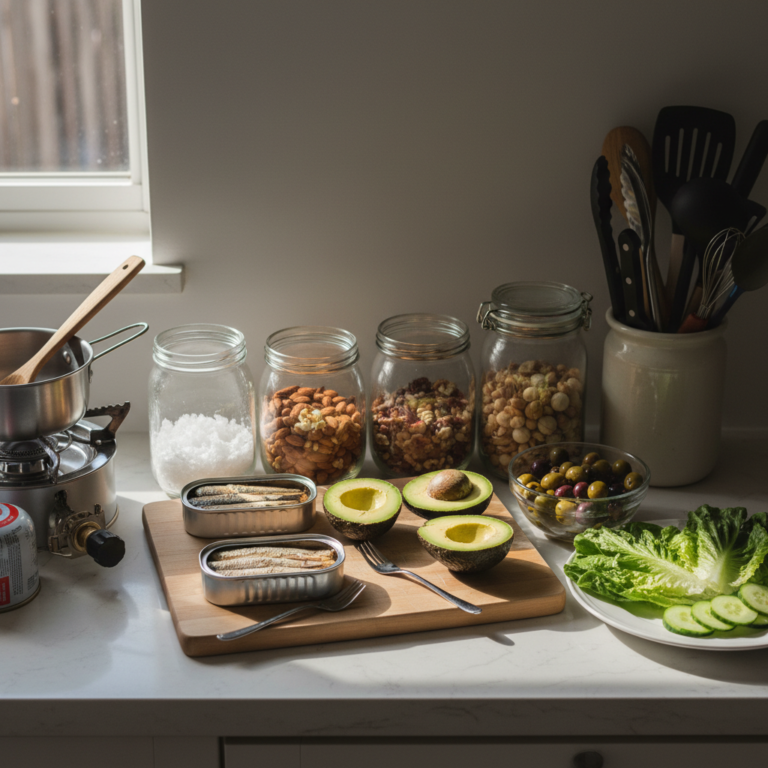
This one is trickier on paleo because a lot of the best sources — bananas, sweet potatoes in large amounts — get limited. Good keto-paleo potassium sources include avocado (about 975mg each), salmon, spinach, and mushrooms. Aim for 3,000-4,700mg per day. This is where most people fall short.
Magnesium
Magnesium deficiency is incredibly common even outside of keto. It’s involved in hundreds of processes in your body — including sleep, muscle function, and stress response. Real food sources: dark leafy greens, pumpkin seeds, dark chocolate (the clean, high-percentage kind), almonds. A magnesium supplement at night is one of the few I genuinely recommend. It helps so much with sleep — something I noticed directly when I started connecting sleep quality to my overall food and supplement habits.
Real-Life Situations That Mess Up Your Electrolytes
It’s not just everyday life that depletes you. There are a few specific situations where getting your keto-paleo electrolyte balance right becomes even more important.
Traveling
Airports, hotel rooms, and eating on the road make electrolyte management genuinely hard. You’re not in your kitchen. You can’t make your morning drink. If you’re planning a trip, packing trace mineral drops and some single-serve electrolyte packets is smart. I talked about this more in my piece on keto travel snacks and staying on track away from home.
Social Events
When you’re eating at someone else’s house or at a restaurant, you lose control over ingredients. You might eat less salt than usual, or eat foods with hidden ingredients that affect your water retention. Having your electrolyte drink before you head out is a smart move. It’s one of those quiet background strategies — along with the ones I explored in navigating social eating without the drama — that keeps you feeling good even when the environment isn’t perfect.
Working Out Hard
Sweat depletes everything faster. If you’re doing any kind of serious exercise, you probably need to double up. Have your DIY drink before, and replenish with broth or another electrolyte drink after. Don’t wait until you feel cramped or dizzy — that’s already too late.
A Simple Daily Routine That Works
Here’s what my actual daily electrolyte routine looks like. Nothing complicated, nothing expensive.
Morning: DIY electrolyte drink (water, salt, lemon, cream of tartar) before coffee.
Lunch: A meal built around potassium-rich foods — salmon, big salad with avocado, cooked greens.
Afternoon: Cup of bone broth if energy dips around 3pm.
Evening: 300-400mg magnesium glycinate with dinner or right before bed.
Workout days: Extra electrolyte drink post-workout, extra salt on food.
That’s honestly it. No complicated supplement stack. No expensive specialty products. The routine has completely stopped my cramps, cleared the headaches, and stabilized my energy in a way that nothing else did.
Troubleshooting: What If You’re Still Struggling?
If you’re still getting cramps, headaches, or energy crashes even after addressing electrolytes, it might be worth looking at the bigger picture. Sometimes these symptoms are about more than just minerals — they can be connected to your fat ratios, inflammatory load, or where you are in the metabolic healing process.
I’ve found it helpful to look at omega balance and the role of fat quality on this kind of diet. When the foundational pieces are right — good fats, anti-inflammatory foods, and proper minerals — the whole system just works better. If something still feels off, it’s also worth reading about healing your metabolism after years of standard diet habits, because sometimes your body needs time to recalibrate.
The goal isn’t perfection. It’s just paying attention and adjusting.
DIY vs Store-Bought: The Final Verdict
Here’s my honest bottom line on keto-paleo electrolyte balance:
DIY wins for daily use. The salt-lemon-cream of tartar drink is cheap, effective, and completely clean. It should be your foundation.
Bone broth wins for real food electrolytes. It’s food, not a supplement. Make it, buy it, drink it regularly.
Magnesium glycinate is worth buying as a standalone. It’s the one supplement that genuinely fills a gap most people can’t close through food alone.
Most electrolyte products are okay at best, hype at worst. If you travel a lot or want convenience, a clean, minimal-ingredient packet is fine occasionally. But don’t rely on them as your daily solution — they’re usually overpriced for what they deliver.
Getting your keto-paleo electrolyte balance right isn’t complicated. It just takes a little attention and some real-food thinking. Start with the morning drink, add the bone broth, take your magnesium at night — and see how different you feel in a week.
You’ve got this. And honestly, once this piece clicks into place, so much else on this eating style starts to feel a lot easier.