Keto Travel Snacks: Airport to Hotel Room Game-Changers
Let me tell you about the worst travel day I ever had on keto. Picture this: delayed flight, missed connection, and me standing in an airport convenience store at 11 PM staring at rows of candy bars and chips. My keto travel snacks were long gone, and I was about to face-plant into a Snickers bar out of pure desperation.
That night changed everything about how I approach travel while staying committed to my keto and paleo lifestyle. Since then, I’ve figured out what actually works when you’re stuck in airports, cramped in hotel rooms, and facing the reality that your perfectly planned meals just went out the window.
Today I’m sharing the real-world strategies that have saved my sanity (and my macros) through countless business trips, family vacations, and unexpected travel chaos. These aren’t Pinterest-perfect solutions – they’re the messy, practical wins that work when life throws you curveballs.
TSA-Friendly Keto Travel Snacks That Actually Make It Through Security
The TSA has some weird rules, and I’ve learned them the hard way. That beautiful jar of almond butter? Nope, too big. The homemade fat bombs in a container? They might get suspicious.
Here’s what consistently makes it through security without drama:
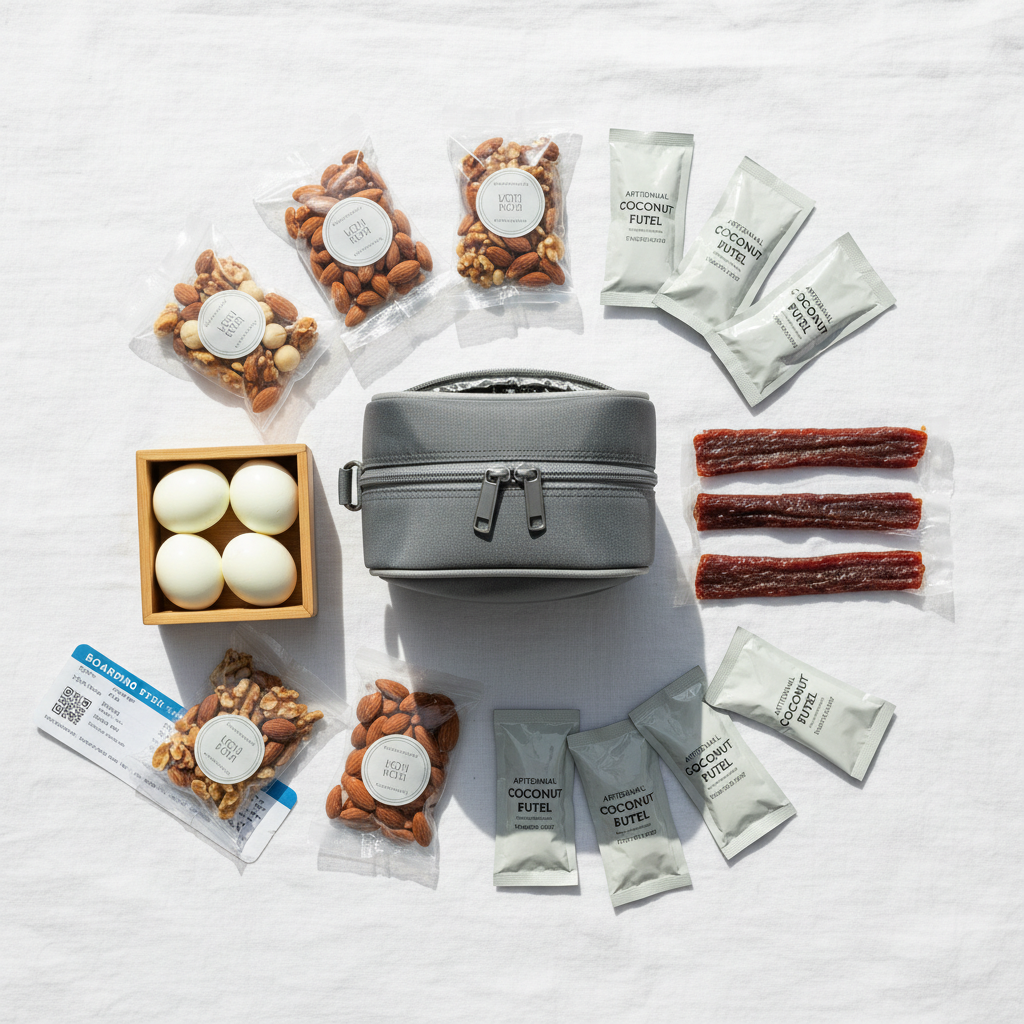
Individual nut packets are your best friend. I buy those single-serve packs of macadamias, pecans, and walnuts in bulk. They’re portion-controlled and never cause issues. Plus, when you’re hangry at gate B12, you won’t accidentally eat an entire bag of nuts.
Beef jerky sticks work great if you read labels carefully. Most commercial jerky is loaded with sugar, but brands like Epic and Paleovalley make clean versions. I always pack extra because airport jerky costs roughly the same as a small car payment.
Hard-boiled eggs might seem risky, but they’re actually perfect. Make them the night before, keep them in the shell, and store in a small cooler bag. TSA has never questioned eggs, and they’re the ultimate portable protein.
For longer flights, I’ve discovered that coconut butter packets are game-changers. They’re under the liquid limit, provide steady energy, and satisfy that need for something creamy and satisfying.
Hotel Room Hacks: Your Mini Kitchen Game Plan
Hotel rooms aren’t exactly designed for healthy eating, but I’ve learned to work with what I’ve got. The key is thinking like a minimalist chef with a very limited toolkit.
First, scope out what you’re working with. Most hotel rooms have a mini-fridge, ice bucket, and coffee maker. Some have microwaves. That’s actually more than you think.
The coffee maker hack changed my travel game completely. You can use it to heat water for instant bone broth, make hard-boiled eggs (seriously!), or even steam vegetables if you get creative with the hot plate.
I always travel with a small cooler bag and hit a local grocery store immediately after checking in. My hotel room shopping list never varies: avocados, pre-cooked rotisserie chicken, cucumber, cherry tomatoes, and whatever local cheese looks good.
The ice bucket becomes your friend for keeping things cold when the mini-fridge is too small or too expensive. I’ve learned that most hotel ice is free and abundant – use it strategically.
Airport Survival: Finding Real Food in Food Courts
Airport food courts used to be my nemesis, but I’ve cracked the code. The trick isn’t finding perfect keto paleo options – it’s knowing how to modify what’s available without being that difficult customer.
At Mexican places, order a burrito bowl, hold the rice and beans, extra guac. Most places are happy to accommodate this, and you get a solid macro balance.
Salad bars are obvious winners, but watch the dressings. Most are loaded with vegetable oils and sugar. I carry individual olive oil packets for this exact situation.
Don’t overlook breakfast places, even for non-breakfast meals. Eggs, bacon, and avocado are available all day at many spots, and they’re usually your cleanest options.
The key insight I’ve learned: befriend the staff. Explain you have dietary restrictions (you do!), and most people will help you figure out modifications. A little kindness goes a long way when you need that burger without the bun.
Convenience Store Strategy: Making the Best of Limited Options
Sometimes you’re stuck with a gas station or hotel convenience store. It’s not ideal, but it’s not impossible either.
Head straight to the refrigerated section first. String cheese, hard-boiled eggs, and those small guacamole cups are usually available. Pair these with nuts from the snack aisle for a balanced mini-meal.
Canned fish is incredibly underrated for travel. Sardines, salmon, and tuna require zero prep and provide quality protein and healthy fats. I always carry a small fork in my travel kit for exactly this situation.
Many convenience stores now carry coconut chips, pork rinds, and other keto-friendly options. Read labels – some are surprisingly clean, others are disaster zones of additives.
The produce section, if there is one, usually has bananas, apples, and basic vegetables. While fruit isn’t strictly keto, an apple with some nuts when you’re truly stuck beats a candy bar every time.
Meal Timing Strategy: Working with Disrupted Schedules
Travel completely destroys your normal eating rhythm, and fighting it usually backfires. Instead, I’ve learned to embrace flexible meal timing and focus on keeping my energy stable.
On travel days, I often end up doing accidental intermittent fasting simply because of delays and limited options. This actually works well with keto – when you’re fat-adapted, skipping a meal isn’t the emergency it used to be.
The key is staying ahead of the hunger curve. Don’t wait until you’re starving to think about food. When you’re genuinely hungry but not desperate, you make better choices.
I’ve also learned to plan for the unexpected. Flight delayed? Airport closed restaurant? I always have backup snacks that can function as a meal if needed. Those keto travel snacks I mentioned earlier can easily become dinner when plans fall apart.
Hotel Breakfast Navigation: Making Continental Work
Continental breakfasts are usually carb festivals, but there are usually some decent options hiding in plain sight.
Eggs are almost always available, even if they’re those weird powdered ones. They’re still protein. Pair them with any available cheese and you’ve got a solid start.
Many hotels now offer Greek yogurt – check if it’s full-fat and add nuts from the cereal bar. Not perfect paleo, but it’ll keep you stable until you can find better options.
Don’t overlook the fruit selection. While I don’t eat much fruit on strict keto, berries with some nuts can work for moderate approaches, and they beat the alternative of being hangry by 10 AM.
Coffee is your friend, especially if you can add real cream or coconut oil. Many hotels have upgraded their coffee setups, and good coffee can help with appetite control during challenging food situations.
Hydration and Electrolytes: The Forgotten Travel Essential
Travel dehydrates you faster than you think, and when you’re keto, electrolyte balance becomes even more critical. I learned this lesson during a particularly brutal red-eye flight where I felt awful for two days afterward.
Now I never travel without electrolyte packets. They’re TSA-friendly, don’t take up much space, and can save your energy levels when everything else goes wrong.
Airport water is expensive, but dehydration is more expensive. Buy the overpriced water and add your electrolytes. Your future self will thank you.
This connects to everything I shared about keto paleo sleep foods – proper hydration and electrolyte balance directly impact your sleep quality, which is already compromised during travel.
Planning Ahead: What Actually Works vs. Pinterest Dreams
I used to over-plan for travel, making elaborate snack boxes and detailed itineraries. Most of that prep ended up being wasted effort because travel rarely goes according to plan.
Instead, I focus on three key areas: portable backup snacks, knowing how to modify standard options, and having a flexible mindset. This approach has served me much better than trying to control every variable.
Research your destination ahead of time, but don’t stress about finding the perfect keto restaurant. Look for grocery stores near your hotel and basic food establishments that can be modified.
Pack like you might get stuck somewhere unexpected, because sometimes you do. Those keto travel snacks need to be substantial enough to function as emergency meals, not just tide-you-over nibbles.
Social Situations: Staying on Track Without Being Difficult
Business dinners, family gatherings, and group meals while traveling present their own challenges. The strategies that work for social eating at gatherings apply here too, but travel adds extra complexity.
When you’re in a group, you have less control over restaurant choices and timing. Focus on being flexible while maintaining your core principles. Eat before group meals if you’re not sure there will be good options.
Don’t make your dietary choices the center of attention during group travel. Handle your food quietly and let others focus on enjoying their experience.
Recovery Strategies: Getting Back on Track Post-Travel
Even with the best planning, travel usually involves some compromises. The key is getting back on track quickly without spiraling into guilt or perfectionism.
Your first meal back home should be simple, nourishing, and familiar. This isn’t the time to try new recipes or complicated meal prep. Go with what you know works for your body.
Don’t weigh yourself immediately after travel – between dehydration, different foods, and disrupted sleep, the scale will lie to you. I learned this the hard way and wrote about it in my post about water weight fluctuations.
Focus on getting your sleep schedule back to normal as quickly as possible. Everything else follows from good sleep, including appetite regulation and decision-making around food.
Budget-Conscious Travel Eating
Eating well while traveling can get expensive fast, but there are ways to keep costs reasonable without compromising your health goals.
Grocery stores are almost always cheaper than airport or hotel food. Even if you’re only grabbing basics for a day or two, it’s worth the trip. The same principles from budget keto-paleo shopping apply when you’re away from home.
Hotels often have deals with local restaurants – ask about partnerships when you check in. Sometimes there are discounts or delivery options you wouldn’t know about otherwise.
Pack more snacks than you think you need. The cost of bringing extra nuts and jerky from home is minimal compared to airport prices for similar items.
Making It Sustainable
The goal isn’t perfect adherence during travel – it’s maintaining enough consistency that you don’t lose momentum with your overall health journey. Perfect can be the enemy of good, especially when you’re dealing with the chaos of travel.
Focus on getting adequate protein and healthy fats rather than hitting exact macro targets. Prioritize sleep and hydration over strict food rules when you have to choose.
Remember that one imperfect travel experience doesn’t undo weeks of good choices at home. The key is getting back to your regular routine as quickly as possible without making travel stress eat away at your long-term progress.
Most importantly, don’t let fear of imperfect food choices prevent you from traveling and living your life. The experiences and memories are worth navigating some dietary challenges, and you’ll get better at it with practice.
Travel will always present challenges for healthy eating, but it doesn’t have to derail everything you’ve worked for. With some practical strategies and a flexible mindset, you can maintain your keto paleo lifestyle while still enjoying the adventure of being somewhere new.