Keto-Paleo Grocery Haul on a Tight Budget
Keto-Paleo Grocery Haul on a Tight Budget: Your Real-World Shopping Game Plan
Let’s be honest — one of the first things people say when they hear “keto” or “paleo” is, “That sounds expensive.” And honestly? They’re not wrong if you’re shopping without a strategy. But a smart keto-paleo grocery budget is absolutely doable, and I say that as someone who has definitely blown their food budget on fancy almond flour and grass-fed everything before learning some hard lessons. This post is what I wish someone had handed me at the start — a real, practical shopping game plan that keeps you on track without draining your bank account.
We’re going to dig into where to spend, where to save, which shortcuts are actually worth it, and how to think about your grocery cart differently. Ready? Let’s shop smart.
Why Keto-Paleo Eating Feels Expensive (And How to Flip the Script)
Here’s the thing: eating keto-paleo can feel expensive because we’re used to padding our plates with cheap fillers. Bread, pasta, rice — these are incredibly affordable. When you remove them, the cost of your protein and produce suddenly stands out more. But that doesn’t mean your overall food spend has to go up.
The key shift is thinking in terms of nutrients per dollar, not just volume per dollar. A bag of rice is cheap, sure. But eggs, canned fish, frozen vegetables, and chicken thighs? These can be incredibly affordable sources of real nutrition when you know what you’re doing.
Once I started thinking this way, my grocery trips felt less like a sacrifice and more like a puzzle I was actually getting good at. And once you nail the keto-paleo grocery budget game, eating clean starts to feel genuinely sustainable — not just financially, but mentally too.
Start With Your Protein Strategy
Protein is usually where the biggest chunk of your food budget goes. So this is also where the biggest savings opportunities live.
Choose Cheaper Cuts of Meat
You don’t need ribeye every night. Honestly, you don’t even need it every week. Some of the most flavorful, nutrient-dense cuts are also the most affordable. Here are my go-to budget-friendly picks:
- Chicken thighs — Almost always cheaper than breasts, more flavorful, and harder to overcook. A win on every level.
- Ground beef (80/20) — Affordable, versatile, and the fat content is actually helpful on keto. Use it in bowls, stuffed peppers, lettuce wraps, or just pan-crumbled with veggies.
- Pork shoulder and pork belly — Slow-cook friendly, incredibly rich, and usually priced well below trendy cuts.
- Beef chuck roast — This is your slow cooker best friend. Low and slow turns a tough, cheap cut into something incredible.
- Whole chicken — Buy whole, roast it, use the carcass for bone broth. You’re essentially getting three meals out of one bird.
Skip the pre-marinated, pre-seasoned meats at the store. You’re paying a premium for convenience, and most marinades have added sugar anyway — which is the last thing you need on keto or paleo.
Don’t Sleep on Canned and Frozen Protein
Canned sardines, salmon, and tuna are some of the most underrated foods in the keto-paleo world. They’re shelf-stable, rich in omega-3s, and incredibly cheap per serving. Yes, sardines have a reputation. But mashed onto cucumber slices with a little mustard? Actually really good.
Frozen shrimp and frozen fish fillets are also fantastic budget picks. They’re often frozen at peak freshness and cost significantly less than fresh options at the fish counter.
If you want to dig deeper into why the type of fat in your protein matters, check out this breakdown on mastering omega balance and fat ratios for keto-paleo — it changed how I think about choosing proteins entirely.
The Vegetable Game: Fresh vs. Frozen vs. Canned
Vegetables are your best friends on a keto-paleo grocery budget. But buying all-fresh, all-organic produce every week can get expensive fast. Here’s how I navigate this without losing my mind or my savings.
Frozen Vegetables Are Not a Compromise
I repeat: frozen vegetables are not the sad backup option. They’re often more nutritious than fresh because they’re frozen right after harvest. And they’re almost always cheaper. My freezer staples include:
- Frozen cauliflower (for cauliflower rice, mash, or roasting)
- Frozen broccoli
- Frozen spinach (great for smoothies and soups)
- Frozen green beans
- Frozen Brussels sprouts
These are all keto and paleo-friendly, and buying frozen means zero waste. No more sad wilted broccoli in the back of the crisper drawer.
When to Buy Fresh
Buy fresh for things you’ll eat quickly and that benefit from texture — salad greens, cucumbers, avocados, zucchini, bell peppers. Watch the weekly sales and plan around what’s on discount. Seasonal produce is almost always cheaper and better tasting.
The Organic Question
Here’s my real-talk take on organic: you don’t have to buy everything organic. That belief is one of the fastest ways to blow a tight food budget. Instead, use the Environmental Working Group’s Dirty Dozen as your guide. Prioritize organic for thin-skinned produce like strawberries, spinach, and apples. Go conventional for avocados, onions, cabbage, and anything with a thick peel you don’t eat.
On a strict keto-paleo grocery budget, that trade-off alone can save you $15-$20 a week without meaningfully changing the quality of what you’re eating.
Eggs: The Unsung Hero of Budget Keto-Paleo
Can we take a moment to appreciate eggs? They’re cheap, incredibly nutrient-dense, endlessly versatile, and they fit perfectly into both keto and paleo. A dozen eggs typically costs less than $4, which is remarkable when you compare it to the protein you’re getting.
Eggs for breakfast, obviously. But also eggs for a quick lunch scramble, hard-boiled eggs as snacks, eggs in a frittata for dinner, or egg salad stuffed into lettuce cups. If you’re doing weekend meal prep, batch-cooking a dozen hard-boiled eggs on Sunday sets you up for easy grab-and-go protein all week long.
Fats: Where to Splurge and Where to Save
Fat is central to keto and paleo eating, and some quality fats genuinely are worth spending more on. But not all of them. Here’s my breakdown:
Worth the Splurge
- Extra virgin olive oil — This is a staple you use constantly. Buy a good one. Cheap EVOO is often cut with lesser oils.
- Coconut oil — Versatile for cooking and affordable enough that you don’t need to cut corners here.
- Avocados — The fat source and the snack. Watch for sales and buy a few at different ripeness stages.
Save Your Money Here
- Nut butters — Peanut butter isn’t technically paleo, but almond butter and sunflower seed butter can be expensive. Make your own in a food processor, or buy the store brand.
- Fancy keto snack products — Most keto-branded bars, chips, and treats are overpriced and often not that clean. They’re also easy to overeat. Real food is almost always cheaper and better for your goals.
Pantry Staples That Make Everything Easier
Having a solid pantry means you can build a meal out of almost anything. These are the low-cost, high-impact items I keep stocked at all times:
- Canned coconut milk (for sauces, curries, soups)
- Canned diced tomatoes
- Canned sardines and tuna
- Apple cider vinegar
- Dried herbs and spices (the real unsung heroes of making simple food taste great)
- Bone broth (or make your own — it costs almost nothing if you’re already buying whole chickens)
- Almond flour and coconut flour (buy in bulk when on sale)
When your pantry is stocked, you stop making expensive last-minute grocery runs. That’s one of the sneakiest budget leaks — those “I just need a few things” trips that somehow cost $60.
And if you want to get more creative with what’s already in your fridge and pantry, this post on creative keto-paleo leftover makeovers is genuinely one of my favorites. Leftovers suddenly become something to look forward to.
Batch Cooking Is Your Budget Superpower
This is the single biggest thing that keeps my keto-paleo grocery budget in check. When I cook in bulk, I waste less, eat out less, and I’m never standing in front of the fridge at 7pm desperately reaching for something that isn’t on plan.
A Sunday batch cook session doesn’t have to take all day. Two hours can set you up with:
- A tray of roasted vegetables
- A pot of ground beef or pulled chicken
- Hard-boiled eggs
- A big batch of cauliflower rice
- A simple bone broth simmering on the back burner
Mix and match those components and you’ve got lunches and dinners handled for most of the week. For a more structured approach to this, the Weekend Warrior Meal Prep guide walks through exactly how to set up a Sunday system that actually works without turning your kitchen into a disaster zone.
Label Reading: The Hidden Cost You’re Paying Without Knowing
Here’s something that took me a while to realize: buying something cheap that isn’t actually clean is money wasted twice. First you pay for it, and then you pay in setbacks to your progress.
Plenty of “paleo” or “keto-friendly” labeled products are loaded with hidden junk — seed oils, added sugars, fillers, and preservatives. Getting good at reading labels means you stop accidentally buying things that work against you. This guide on hidden carbs in paleo foods is a real eye-opener if you haven’t read it yet.
Where to Shop for the Best Keto-Paleo Prices
Your choice of store matters a lot on a tight budget. Here’s the honest breakdown:
- Costco or Sam’s Club — Excellent for bulk olive oil, almond flour, frozen vegetables, eggs, and large cuts of meat. The per-unit cost is usually significantly lower.
- Aldi — Consistently underrated for produce, eggs, and even decent quality meat. Check their weekly specials.
- Walmart — Not glamorous, but their Great Value coconut oil, canned fish, and frozen produce are legitimately solid options.
- Local farmers markets — Hit end-of-day sales for steep discounts on produce that needs to be used soon. Great for batch roasting or making soups immediately.
- Whole Foods / Natural Grocers — Save these for specific items you can’t find elsewhere or when they’re running a sale. Don’t do your full shop here on a budget.
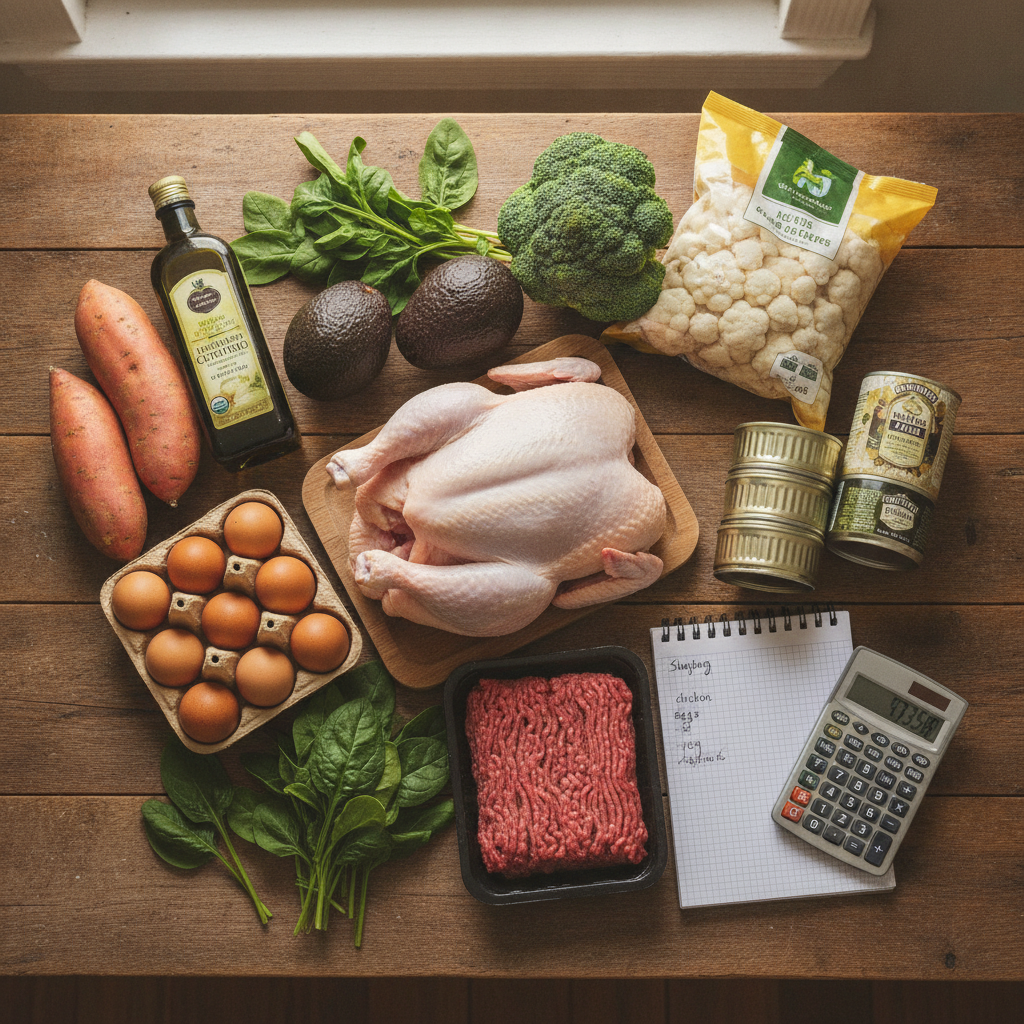
Sample Budget Keto-Paleo Grocery Haul (Under $75)
Here’s a realistic example of what a week of keto-paleo eating can look like without overspending:
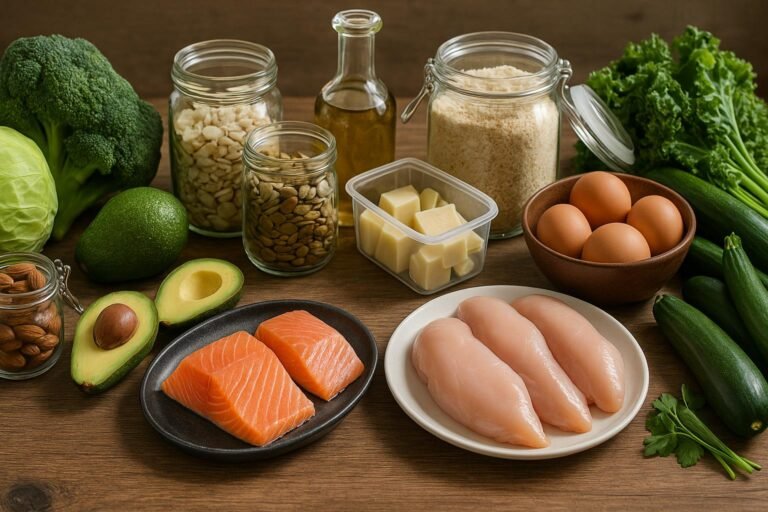
- 2 lbs ground beef (80/20) — ~$9
- 1 whole chicken — ~$8
- 2 dozen eggs — ~$7
- 2 cans sardines + 2 cans tuna — ~$6
- Frozen broccoli, cauliflower, spinach (3 bags) — ~$8
- Fresh avocados (4) — ~$5
- Bag of salad greens — ~$4
- Zucchini, bell peppers, onions — ~$6
- Coconut oil — ~$5
- Canned coconut milk (2 cans) — ~$4
- Canned diced tomatoes (2 cans) — ~$3
- Olive oil (if needed) — ~$7
Total: ~$72. That’s a week of real, clean keto-paleo food. No sad salads, no suffering. Just smart choices.
If you want an even deeper dive into making this work weekly, I’ve written more about eating well under $75 weekly on keto-paleo — it pairs really well with this post.
A Few More Money-Saving Habits Worth Building
Beyond what you buy, how you shop matters just as much. A few habits that have made a real difference for me:
- Always shop with a list. Impulse buys kill budgets. Know what you need before you walk in.
- Check the markdown section. Most grocery stores have a reduced-price section for meat near its sell-by date. Buy it, freeze it same day, use it later. This is legitimate savings.
- Plan meals around what’s on sale, not the other way around. Flexibility here saves a lot of money over time.
- Don’t shop hungry. This one should be obvious but it’s ruined more grocery budgets than anything else.
And one more thing — staying on plan away from home also protects your budget. When you’re prepared with snacks and have a plan for social situations, you’re less likely to blow the budget on expensive restaurant meals. That post on navigating keto-paleo social eating without drama is really helpful for this.
You Don’t Have to Be Perfect, Just Consistent
Here’s what I want you to take away from all of this: a solid keto-paleo grocery budget isn’t about being perfectly optimized every single week. It’s about building enough smart habits that the expensive mistakes stop happening as often.
Some weeks you’ll find an amazing sale on salmon. Other weeks you’re exhausted and buying the pre-cut stir-fry vegetables even though they cost more. That’s fine. Progress over perfection, always.
The goal is a sustainable way of eating that doesn’t stress your body or your bank account. And that is absolutely possible. I’m proof of it, and so are a lot of other real people quietly doing this without a food influencer budget.
Start with one change this week. Maybe it’s swapping chicken breasts for thighs. Maybe it’s adding two bags of frozen broccoli to the cart. Maybe it’s just making that shopping list before you go. Small moves compound. And eventually, eating this way just becomes how you eat — affordable, satisfying, and genuinely good for you.
That’s the whole game. You’ve got this.