Keto-Paleo Altitude Cooking: High-Elevation Recipe Fixes
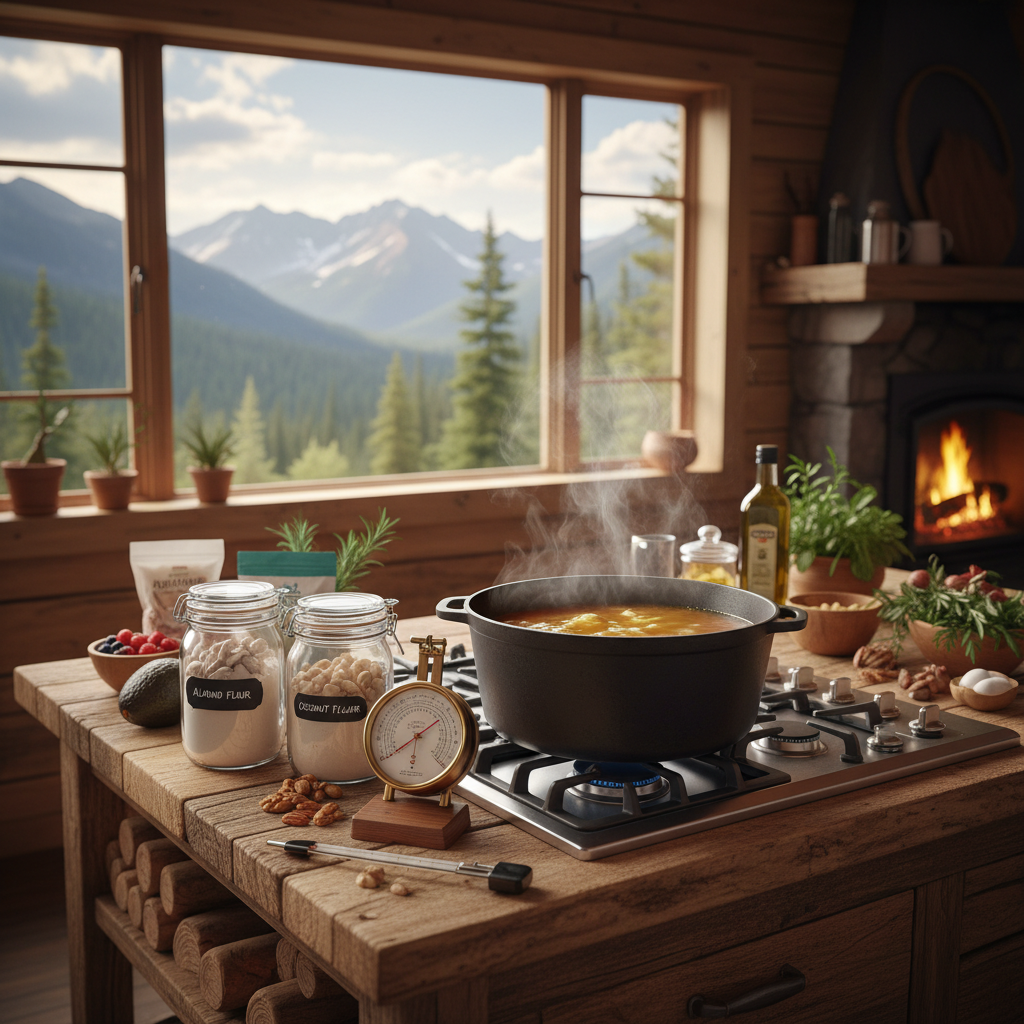
Living at altitude has taught me that altitude cooking transforms everything about your keto-paleo kitchen. When I moved to 7,200 feet, my trusted almond flour bread turned into hockey pucks, and my bone broth refused to gel properly. If you’re cooking above 3,000 feet, you’ve probably experienced these frustrations too.
The thin air at high elevations affects moisture, pressure, and cooking times in ways that can sabotage even your most reliable recipes. But once you understand these changes, adjusting becomes second nature.
Why Altitude Cooking Changes Everything for Keto-Paleo
At higher elevations, lower air pressure creates a domino effect in your kitchen. Water boils at lower temperatures – at 5,000 feet, it boils at 203°F instead of 212°F. This seemingly small change impacts every cooking method.
Moisture evaporates faster in thin air. Your carefully measured almond flour can turn dry and crumbly before you know it. Meanwhile, leavening agents like baking soda work overtime, causing baked goods to rise too quickly and then collapse.
For our keto-paleo approach, these changes hit particularly hard because we rely on alternative flours and fats that behave differently than conventional ingredients. Understanding these principles helps you troubleshoot any recipe.
Mastering High-Altitude Baking Adjustments
Almond flour and coconut flour need special attention at altitude. I’ve learned to reduce baking powder by 25% and add an extra egg or two tablespoons of liquid to compensate for faster moisture loss.
Here’s my go-to adjustment formula for altitudes above 3,000 feet:
For every 1,000 feet above 3,000:
• Increase liquid by 2-4 tablespoons
• Reduce baking powder by 1/8 teaspoon
• Add 1-2 tablespoons extra flour (almond or coconut)
• Increase oven temperature by 15-25°F
• Reduce baking time by 5-8 minutes
My Keto-Paleo Substitution Lab techniques become even more valuable when you’re working with these altitude variables. Small adjustments make huge differences.
The trick with coconut flour is being extra conservative – it absorbs moisture aggressively at altitude. Start with less liquid than you think you need.
Fixing Protein and Fat Cooking Issues
Meat cooking changes dramatically at altitude. Lower boiling temperatures mean your slow-cooked meats take longer to break down properly. I’ve extended my usual braising times by 25-30% and found the results much more satisfying.
Bone broth presents unique challenges. The lower boiling point means collagen extraction happens more slowly. I now simmer my broths for 36-48 hours instead of 24, and I’ve had much better gelation results.
Fat rendering behaves differently too. Bacon and other fatty cuts need lower heat settings and longer cooking times. This actually works in our favor – slower rendering creates better texture and flavor development.
For quick weeknight meals like those in my 5-Ingredient, 15-Minute Keto-Paleo Dinners, I’ve learned to start proteins a few minutes earlier and keep heat slightly lower than sea-level recipes suggest.
Liquid and Seasoning Modifications
Altitude cooking demands more aggressive seasoning. The dry air mutes flavors, and faster moisture evaporation concentrates some tastes while diminishing others.
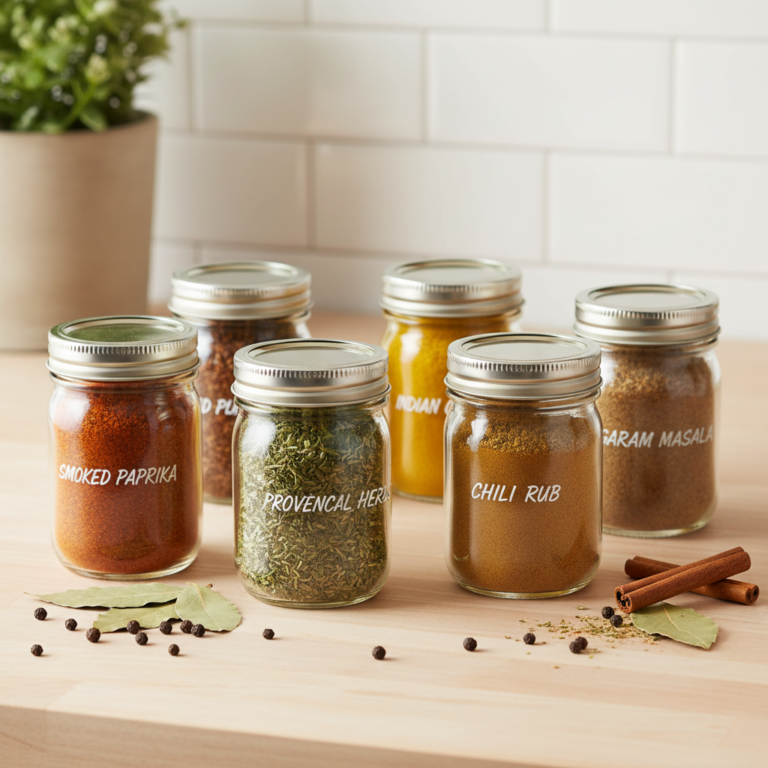
I’ve started adding 25% more herbs and spices to most dishes. Salt needs particular attention – use it more liberally during cooking, but taste frequently as liquids reduce faster.
Fermented foods from my Ferments and Flavor approach work beautifully at altitude. The lower air pressure actually encourages fermentation, so your sauerkraut and kimchi develop faster and with more complex flavors.
Broths and soups concentrate quickly, so I start with extra liquid and adjust seasoning toward the end of cooking. This prevents over-salting when liquids reduce faster than expected.
Temperature and Timing Strategies
Oven temperatures need strategic adjustments. I typically increase temperature by 15-25°F and reduce cooking time by 10-20%. This compensates for faster moisture loss and helps achieve proper browning.
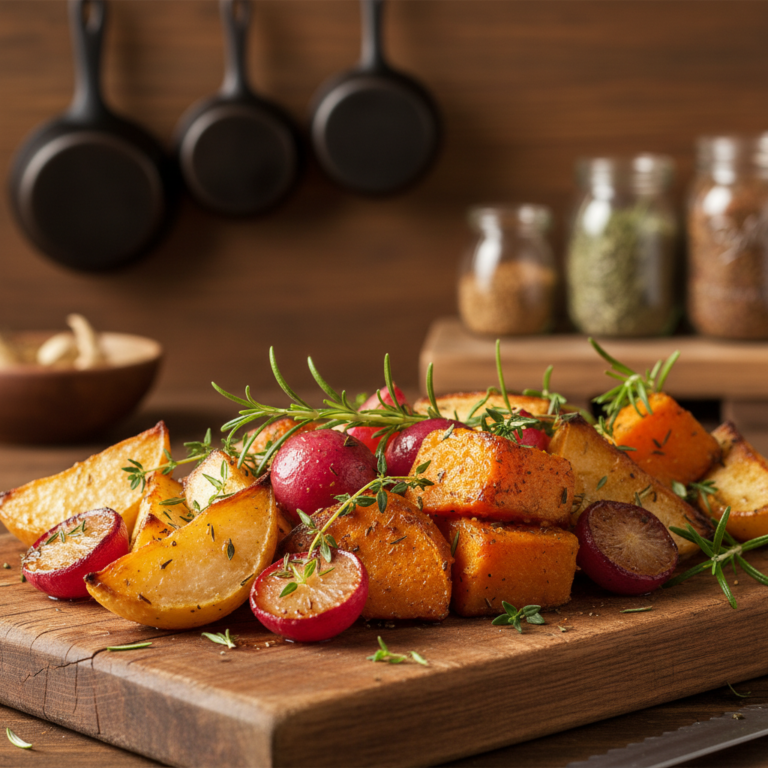
For roasted vegetables, I’ve found that higher heat actually works better. The quick searing locks in moisture that would otherwise evaporate too rapidly.
Slow cooking requires patience. What takes 4 hours at sea level might need 5-6 hours at altitude. I’ve embraced this slower pace – it often results in better flavor development anyway.
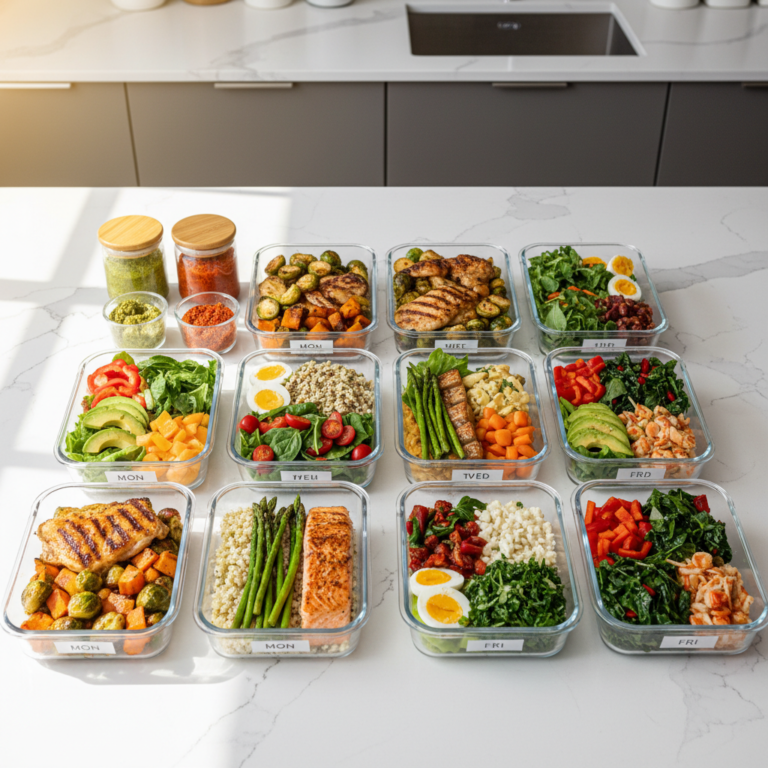
My batch cooking approach from Athlete-Approved Batch Cooking works especially well at altitude because I can adjust large batches and freeze portions with consistent results.
Storage and Meal Prep Considerations
Dry air means faster dehydration for prepared foods. I’ve learned to store everything more carefully, using airtight containers and adding extra moisture when reheating.
Frozen meals thaw differently at altitude. The lower air pressure affects ice crystal formation, so frozen portions often have different textures when reheated. Adding a bit of extra fat or liquid during reheating usually fixes this.
Fresh produce loses moisture faster, so I shop more frequently or invest in better storage solutions. This aligns perfectly with the market-fresh approach I discuss in Market-First Keto-Paleo.
Practical Solutions That Actually Work
After three years of high-altitude cooking, these strategies have become automatic. Start with small adjustments and keep notes about what works for your specific elevation.
Invest in a good oven thermometer – altitude affects oven performance, and built-in thermostats aren’t always accurate. I’ve found 25°F differences between the setting and actual temperature.
Keep backup ingredients on hand. When experiments don’t work out, having extra eggs, almond flour, or broth means you can quickly adjust and try again.
Most importantly, embrace the process. Altitude cooking has made me a more intuitive cook, better at reading visual and sensory cues rather than relying solely on times and temperatures.
Your high-elevation kitchen might seem challenging at first, but these adjustments quickly become second nature. The reward is food that tastes even better than sea-level versions, with deeper flavors and more satisfying textures.