Keto-Paleo Fermented Foods: Gut Health Game Changers
Let me be honest with you – when I first started exploring keto-paleo fermented foods, I was overwhelmed. Which ferments actually fit our lifestyle? What about the carbs in traditional fermentation? After months of kitchen experiments (and some spectacular failures), I’ve discovered that fermented foods can absolutely be gut health game changers while staying true to keto-paleo principles.
The trick isn’t avoiding fermented foods altogether – it’s knowing which ones work and how to make them work for you.
Why Keto-Paleo Fermented Foods Matter More Than You Think
Your gut microbiome doesn’t care about your macro counting. But here’s what I’ve learned: the right fermented foods support both your digestive health and your keto-paleo goals simultaneously.
Traditional fermentation transforms vegetables in fascinating ways. The beneficial bacteria consume natural sugars, reducing the net carb content while creating probiotics. Meanwhile, the fermentation process breaks down compounds that some people struggle to digest, making nutrients more bioavailable.
I used to think fermented foods were too carb-heavy for keto. Then I discovered that properly fermented sauerkraut contains only about 1-2 grams of net carbs per half-cup serving. Game changer? Absolutely.
The Keto-Paleo Fermentation All-Stars
Not all fermented foods play well with our lifestyle. Here are the ones that consistently work:
Sauerkraut: Your Daily Probiotic Powerhouse
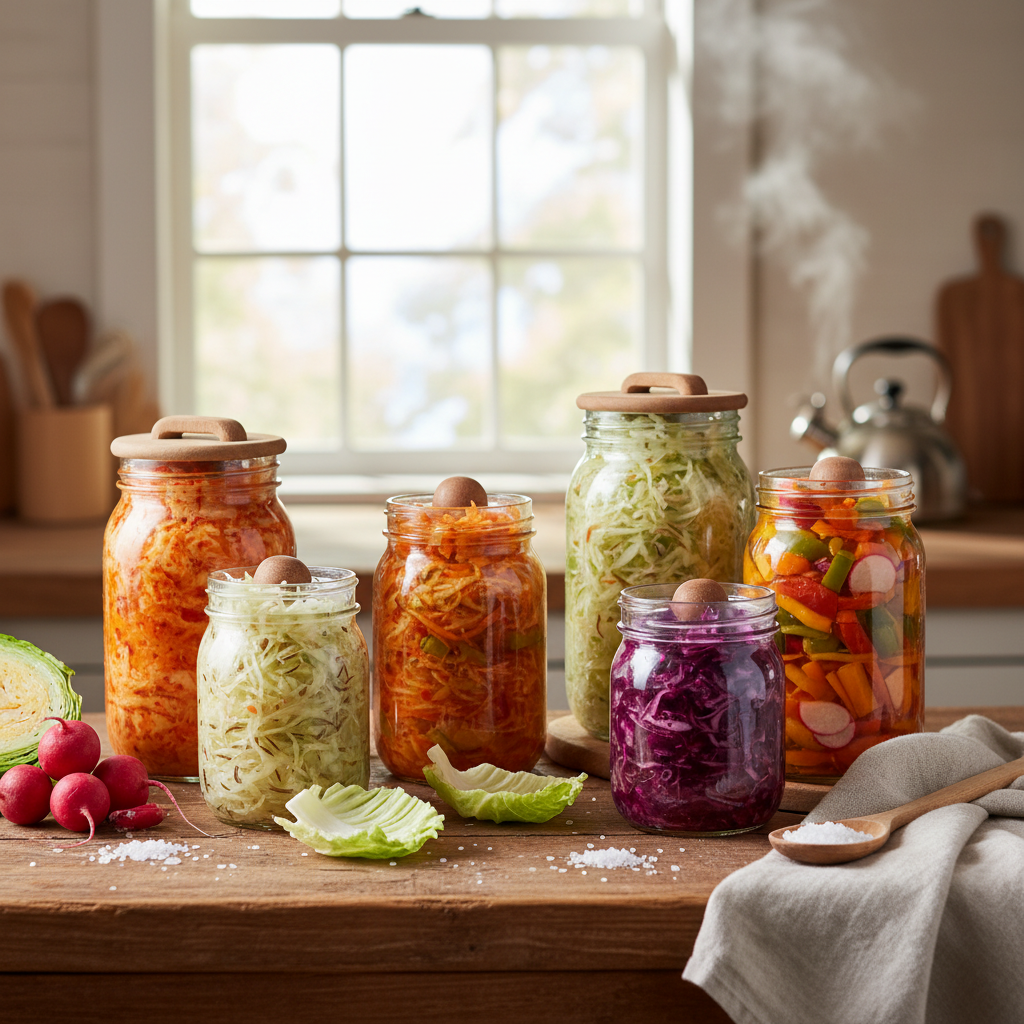
Real sauerkraut (not the pasteurized grocery store version) is pure magic. Just cabbage, salt, and time create this tangy, probiotic-rich food that fits perfectly into any plate-first keto-paleo meal.
I make a fresh batch every two weeks. The process is surprisingly forgiving, and the flavor develops beautifully over time.
Kimchi: Spicy, Complex, and Keto-Friendly
Traditional kimchi can be tricky because many recipes include added sugars or rice. However, when you make it yourself, you control every ingredient. My version uses coconut aminos instead of traditional fermented fish sauce (keeping it paleo-friendly) and skips any added sweeteners.
The fermentation process mellows the heat while developing incredible depth of flavor. Plus, it pairs beautifully with fatty meats and eggs.
Fermented Vegetables: Beyond Cabbage
Cauliflower, radishes, turnips, and green beans all ferment beautifully. These vegetables start relatively low in carbs and become even more keto-friendly through fermentation.
My current favorite? Fermented radishes with garlic and ginger. They add incredible crunch and tang to salads and meat dishes.
Making Keto-Paleo Fermented Foods at Home
Home fermentation isn’t as intimidating as it sounds. In fact, it’s more forgiving than most cooking techniques once you understand the basics.
The Essential Setup
You don’t need fancy equipment to start. I use mason jars, sea salt, and clean kitchen towels. That’s it. However, if you plan to ferment regularly (like I do for my athlete-approved batch cooking routine), investing in proper fermentation weights and airlocks makes the process more consistent.
Basic Sauerkraut Recipe That Actually Works
Here’s my foolproof method:
Ingredients:
– 1 medium cabbage (about 2 pounds)
– 1 tablespoon sea salt
– 1 teaspoon caraway seeds (optional)
Process:
Shred the cabbage finely. Sprinkle with salt and massage vigorously for 5-10 minutes until liquid appears. Pack tightly into a clean jar, ensuring liquid covers the cabbage. Cover with a cloth and secure with a rubber band.
Ferment at room temperature for 3-10 days, tasting daily. When it reaches your desired tanginess, refrigerate.
The beauty of this recipe is its simplicity. It works consistently, and the flavor develops exactly how you want it.
Troubleshooting Common Fermentation Fails
Let me save you from my early mistakes. Here are the issues I encountered and how to avoid them:
Problem: Mushy Vegetables
This usually happens when you use too much salt or ferment too long at high temperatures. Keep your fermentation area between 65-75°F, and start tasting after day 3.
Problem: No Fermentation Activity
If nothing’s happening after 3-4 days, your salt ratio might be too high, or your vegetables weren’t fresh enough. Start over with fresher produce and slightly less salt.
Problem: Weird Smells or Colors
Trust your instincts here. Proper fermentation smells tangy and slightly sour, not putrid. If you see fuzzy mold or detect off odors, compost it and start fresh.
The key is maintaining proper salt ratios and keeping everything submerged under the brine.
Integrating Fermented Foods Into Your Keto-Paleo Routine
The biggest question I get is: how much and how often? Start small – about 1-2 tablespoons daily with meals. Your digestive system needs time to adjust to the increased probiotic activity.
I love adding sauerkraut to my breakfast eggs or serving kimchi alongside protein rotation meals. The acidic tang cuts through rich, fatty foods beautifully while supporting digestion.
For those following a fiber-focused keto-paleo approach, fermented vegetables add both probiotics and gentle fiber that’s easier to digest than raw vegetables.
Storage and Meal Planning with Fermented Foods
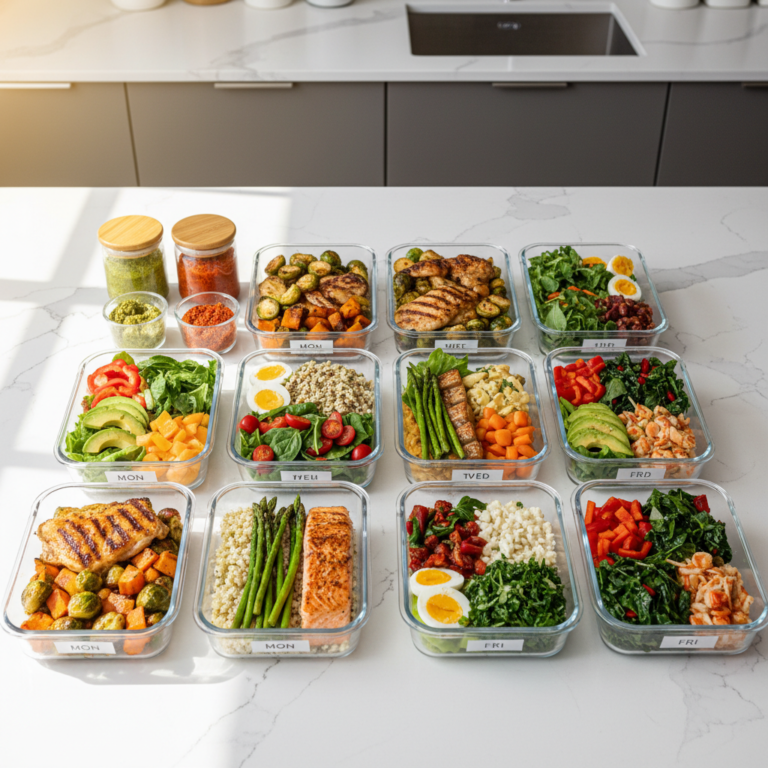
Properly fermented vegetables keep for months in the refrigerator. This makes them perfect for meal prep and planning. I always keep three different fermented vegetables on hand, rotating through different flavors and textures.
When I’m preparing for travel (like in my travel-light keto-paleo guide), I pack small portions in leak-proof containers. They travel well and add crucial probiotics when your eating routine gets disrupted.
Building Your Fermentation Rotation
Start with one type of fermented vegetable and master it before moving on. I recommend beginning with sauerkraut because it’s the most forgiving and versatile.
Once you’re comfortable, add kimchi or fermented radishes to your repertoire. Having multiple fermented vegetables ready means you always have something tangy and probiotic-rich to add to any meal.
The Long-Term Gut Health Benefits
After incorporating keto-paleo fermented foods into my daily routine for over a year, the benefits extend far beyond digestive health. My energy levels are more stable, my sleep has improved, and I rarely experience the digestive discomfort that used to plague me.
The probiotics from fermented foods work synergistically with the anti-inflammatory nature of keto-paleo eating. It’s like giving your gut the tools it needs to support your entire health journey.
Remember, consistency matters more than perfection. A small serving of fermented vegetables daily trumps sporadic large amounts. Start where you are, use what you have, and let your taste buds guide you toward the fermented foods that make you feel best.
Your gut (and your taste buds) will thank you for making this simple but powerful addition to your keto-paleo lifestyle.